Toward Donut-Centered Design: A Design Research Toolkit for the 21st Century
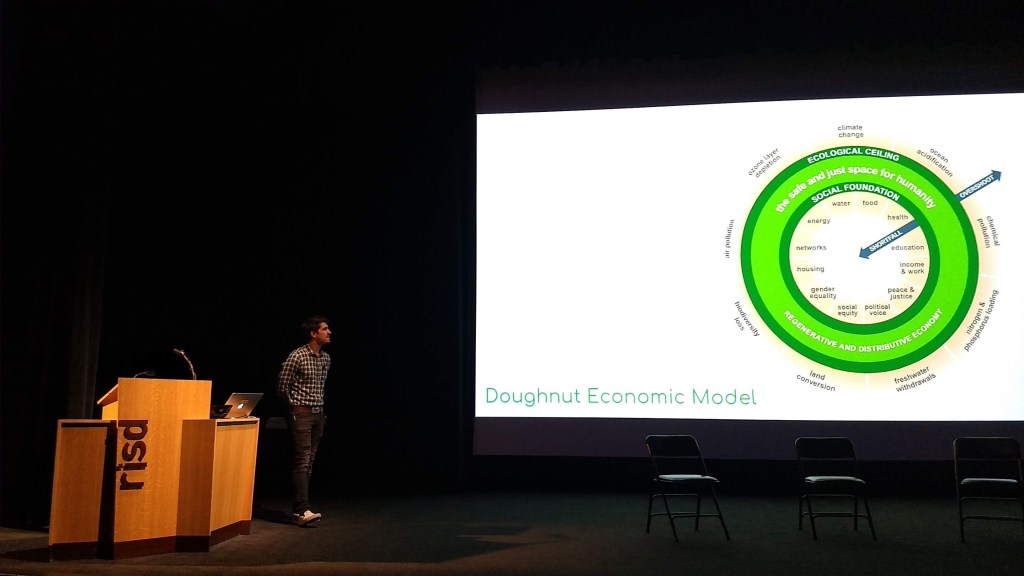
The social and ecological challenges of the 21st century require a design research process that contributes to viable economic solutions. This paper proposes donut centered design as a hybrid of service design and ecological design that works within the donut economic model. It describes how private and public sector ethnographers can weld the best of these two processes by providing a holistic, empirical research foundation that seeks to provide distributed service innovation value to all within the limits of the planet. Donut-centered design addresses lacunae of the current innovation models by advocating multi-site assessments, multi-species ethnography, ecosocial blueprints and holistic metrics as important components of a regenerative design research practice.
Diagnosing the World Pulse
This PechaKucha explores the ethics of interpreting data by employing an extended metaphor of data as the lifeblood of the connected world. It begins by exploring two distinct viewpoints on medical pulse diagnosis, starting from the perspective of the acupuncturist diagnosing a patient’s pulse and continuing through differences between Eastern pulse diagnosis and biomedical pulse diagnosis. I explore data as lifeblood, and imagine more visceral ways to read data (e.g., auguring data) and the ethical implications of such a reading. I envision data as a flowing river filling a lake, in which diagnostic specialists observe society’s reflection. In the process, I contrast utopian visions of a data driven world with dystopian ones before resolving tension by returning to the central comparison of data scientist and medical doctor. The presentation concludes by recalling medicine’s Hippocratic Oath, an ethical charter binding practitioners to a code of conduct, and implying that data science consider a similar injunction.
The Ethnographer’s Spyglass: Insights and Distortions from Remote Usability Testing
Ethnographic Praxis in Industry Conference
October, 2017
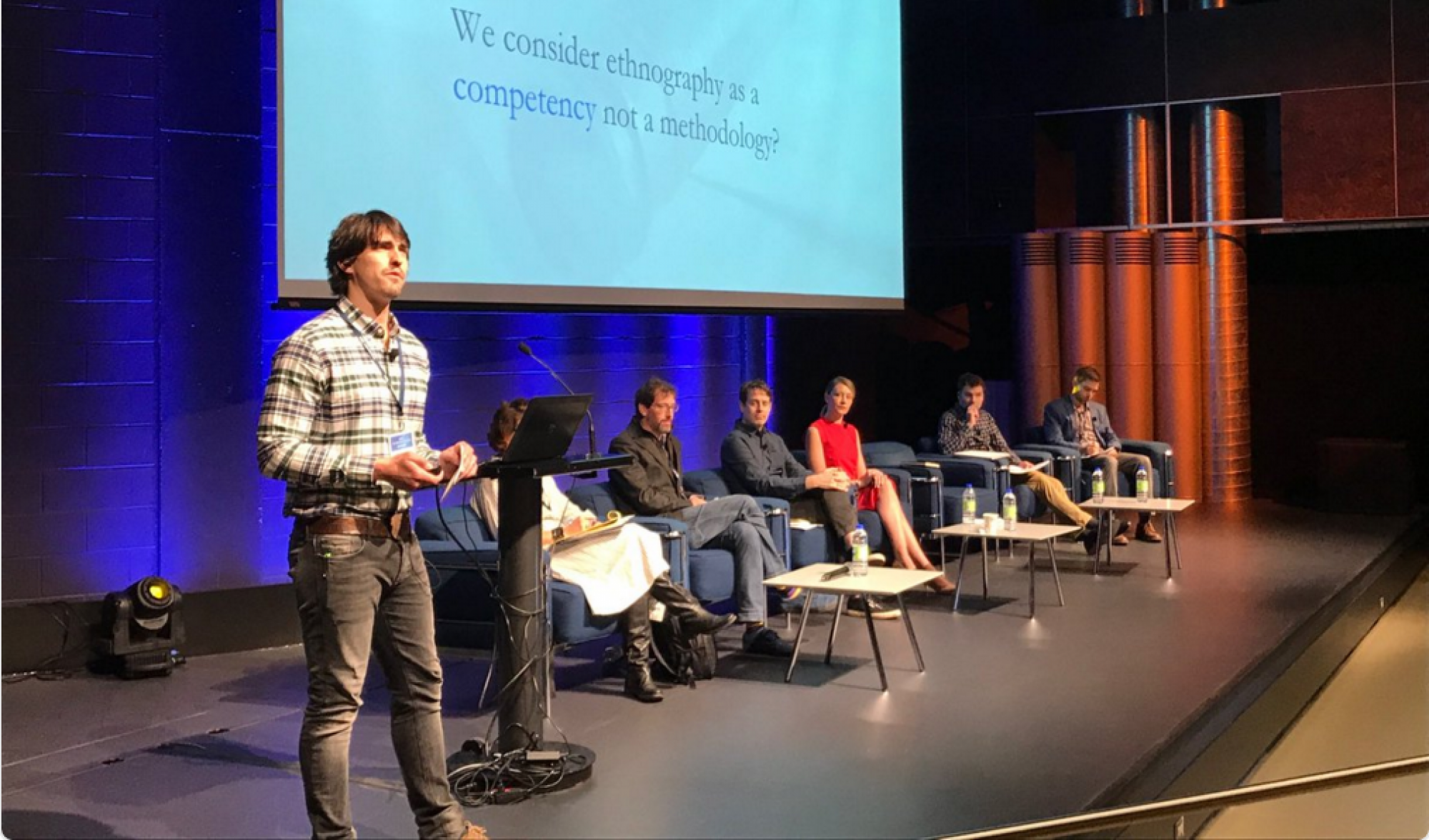
This paper examines the cultural counter-flow between ethnography and remote usability testing, specifically what such tools might offer ethnographic practice. I explore how remote usability testing can both extend and delimit ethnographers’ sight lines. Because remote testing has a narrow aperture, long sight line, poor context and quick turnaround, I invoke the metaphor of a spyglass in the hands of the ethnographer to understand this increasingly available digital research method. Remote usability testing can quickly access insights and novel footings, while simultaneously creating myopic, distorted or biased understandings. Theoretically, the history of usability studies is compared to that of archaeology as it transitioned from a cultural product focus to a context focus. Practically, several workflows are presented that use the strengths of ethnography and remote usability testing to enhance one another. Finally, ethnography is discussed as a craft-like competence, rather than a method, that crosses increasingly diverse methodological terrain.
Designing Interpretation: The Task of the Experience Designer
Masters in Human Computer Interaction Capstone Lecture, Carnegie Mellon University
May 2017
Fighting with Wine: Ruin Resistance and Renewal in a Qom Community in Northern Argentina
University of Pennsylvania
October 2015
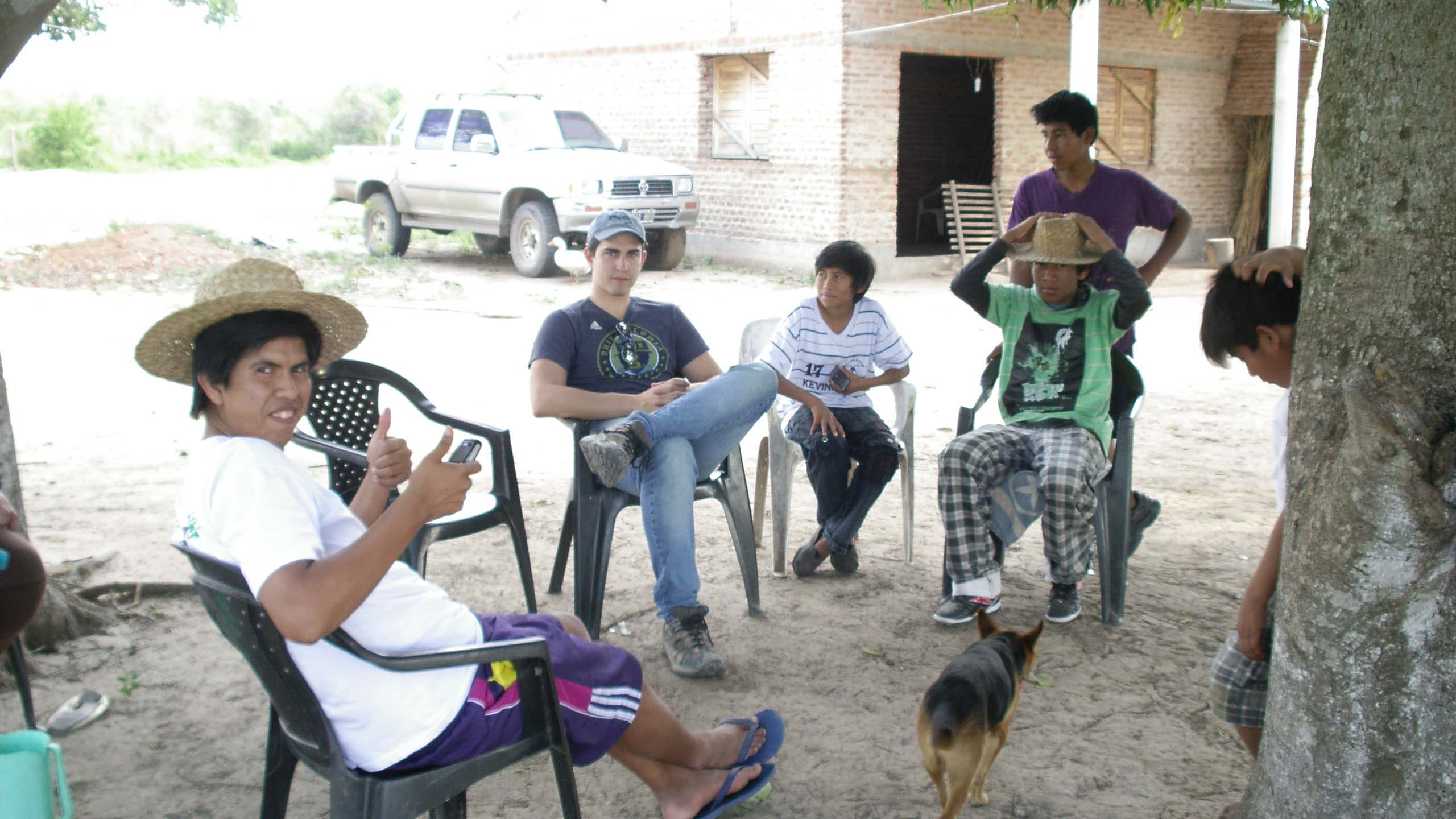
This study examines public binge drinking among the Qom (Toba) ex-foragers of Formosa, northern Argentina. Based upon 15 months of ethnographic fieldwork in a peri-urban Qom barrio (Lot 84), this analysis relates binge drinking to Qom ethnohistory, community life, and interactions with the Argentine state. The public, performative nature of Qom binge drinking is explored; intoxication is shown to convey in sometimes violent public spectacle the pathos of their socioeconomic marginality, reinforce non-indigenous Argentines’ entrenched perceptions of violent “Indians”, and paradoxically provide the Qom with vehicle for continued colonial resistance. Many Qom view drinking problems as rooted in Lot 84’s close proximity to the city (Formosa) relative to more rural Qom villages. Thus they reference a continuum of health that runs from urban, non-indigenous spaces to the rural bush country where foods—including home-brewed alcohol—are healthful rather than harmful. In kind, the violence and perceived chaos associated with public binge drinking has led to the development of programs intended to stem alcohol use in the community. Locally, counseling efforts are woven in the missions of evangelical churches and the Catholic chapel, while top-down efforts focus upon state-run psychoanalysis. Psychoanalysis is explored as a paternalistic form of governmental domination and attempted assimilation. Rather than relying upon state-run methods for personal and communal re-integration, many Qom centrally position a period of alcohol use within their personal development narratives, during which alcohol allowed them to find personal responsibility or an improved relationship with God. On a communal level, fighting against public alcohol use among youth has led to increased community solidarity and capacity building through sport, education and indigenous-led program creation. In summary, public binge drinking is manifest in the Qom community not through acculturation or personal pathology, but rather as a multi-valent, ritualesque performance that levies resistance against prevailing social conditions and, despite the profound tax of violence, occasions personal and communal transformation.
Context and Consensus in Culturally Appropriate Sobriety Interventions: A View from Northern Argentina
Society for Applied Anthropology
March 2015
This paper contributes to debate surrounding culturally appropriate sobriety interventions by analyzing the continued influence of sendentarization processes on tribal consensus-building in an ex-foraging Qom population in northern Argentina. Anthropologists’ critique of power asymmetries in health services led to exploration of “culturally appropriate” interventions wherein community participation is paramount. Such approaches often assume uniform communal desires or the political will to build communal consensus. The Qom case underscores the role of heterogenous tribal histories stymying political cooperation and the de facto abdication of self-determination that results under such circumstances.
Papa Plata (Father Money), Welfare Subsidies, and the Emasculation of the Qom Man
Association of Indigenous Anthropologists
November 2013
Scholars concerned with the intersection of gender, family dynamics and economics have observed that men’s power, self-worth and masculine identities often derive from their control of familial wealth. Drawing on interviews and observations from 15-months of fieldwork in a sedentarized ex-foraging Qom community in northern Argentina, the following article examines a rare case in which domestic and communal economic control lies primarily with the women by warrant of Argentina’s welfare system. This situation constitutes a rapid and destabilizing departure from their traditional patrilineal-egalitarian social structure. The present system is more a state-centered one than a woman-centered one, wherein the government marginalizes Qom men as it obviates the functions of their traditional roles. In this paper I will explore how the Qom personify the state as Papa Plata (Father Money), an authoritarian paternal figure who intentionally installs himself as head of the Qom family, and how that positioning affects family dynamics, gendered power and roles, and conceptualizations of femininity and masculinity. I argue that, by occupying men’s roles and requiring gratitude and loyalty for its generosity, the state creates structural limits to indigenous economic autonomy. Men consider themselves to be emasculated and belittled by their exclusion, which is magnified on the local level by a persistent pragmatic foraging ethos whereby contemporary men continue to be measured by traditional yardsticks. A sense of searching for manhood is in turn implicated in alcohol consumption, sporting, evangelical church membership, gang participation and domestic violence.
In Vino Veritas Est: Conflicting Empiricisms, Methodological No-Man’s-Lands, and the Obligations of an Anthropological Study of Indigenous Alcoholism
Johns Hopkins University
April 2013
Intoxication is an ideal context to begin a discussion on what constitutes the empirical and how truth claims are derived therefrom. Drunken philosophical discussions aside, the planning, execution and analysis of research on alcohol use among a transitioning community of ex-foragers in northern Argentina illuminated conflicting theoretical orientations, distinct research methodologies, polarized funding procedures, and differently perceived obligations to informants in a four-field anthropology department. These came into sharp relief as I completed my transition from biological anthropologist studying paternal testosterone changes to cultural anthropologist examining the politics of indigenous alcoholism. My trajectory, which took me from one distinct empirical and epistemological paradigm to the other while remaining in the same department, and the subject matter of my research (alcoholism) position me uniquely to discuss truth claims, methods, and the empirical as they pertain to both the workings of disciplinary machinery and to our participants/informants. While biological anthropology draws upon abstraction, deduction, and quantifiable data to generate truth claims, cultural anthropology equates the empirical with the experiential. Though both have taken up alcohol use as a scholarly subject, they tend to phrase arguments in such a way as to diminish the relevance of the type of empirical data employed by the other side due primarily to distinct and non-overlapping methodological preferences, heritages, and interpretations. Because proposals for new research are funded based on how persuasively particular methodologies are employed toward filling disciplinary lacunae and answering parochial questions generated using the same methods, a no-man’s-land is opened up by the workings of the funding process. When proposing a mixed methods approach to alcohol use, I was told flatly to pick one approach (biosamples) or the other (interviews and participant observation) not because synthesizing the data was impossible but because the probability of having my projected funded would be increased dramatically if I were to employ only one methodology—reviewers would consider the time and money spent on non-preferred knowledge generation process to be superfluous. After conducting my solely ethnographic data gathering, I have found that the truth of contingent truth is not accepted by my indigenous collaborators, who are eager to receive, in exchange for their participation, suggestions on how alcohol use (which they have always assumed that I assumed was negative) might be stemmed in their communities and a scholarly reaffirmation that their current alcohol use is a symptom of societal decline. Drawing on the experiences outline above, I will begin with 1) an examination of the empirical from both biological anthropological and cultural anthropological viewpoints, continue to examine 2) the influence these competing epistemologies hold on the process of proposing and conducting anthropological research, and conclude with 3) the non-scholarly obligations I now carry as a result of my study of alcohol consumption in a community where truth claims and plans of action were part of the informal social contract between anthropologist and community.
 Christopher Golias