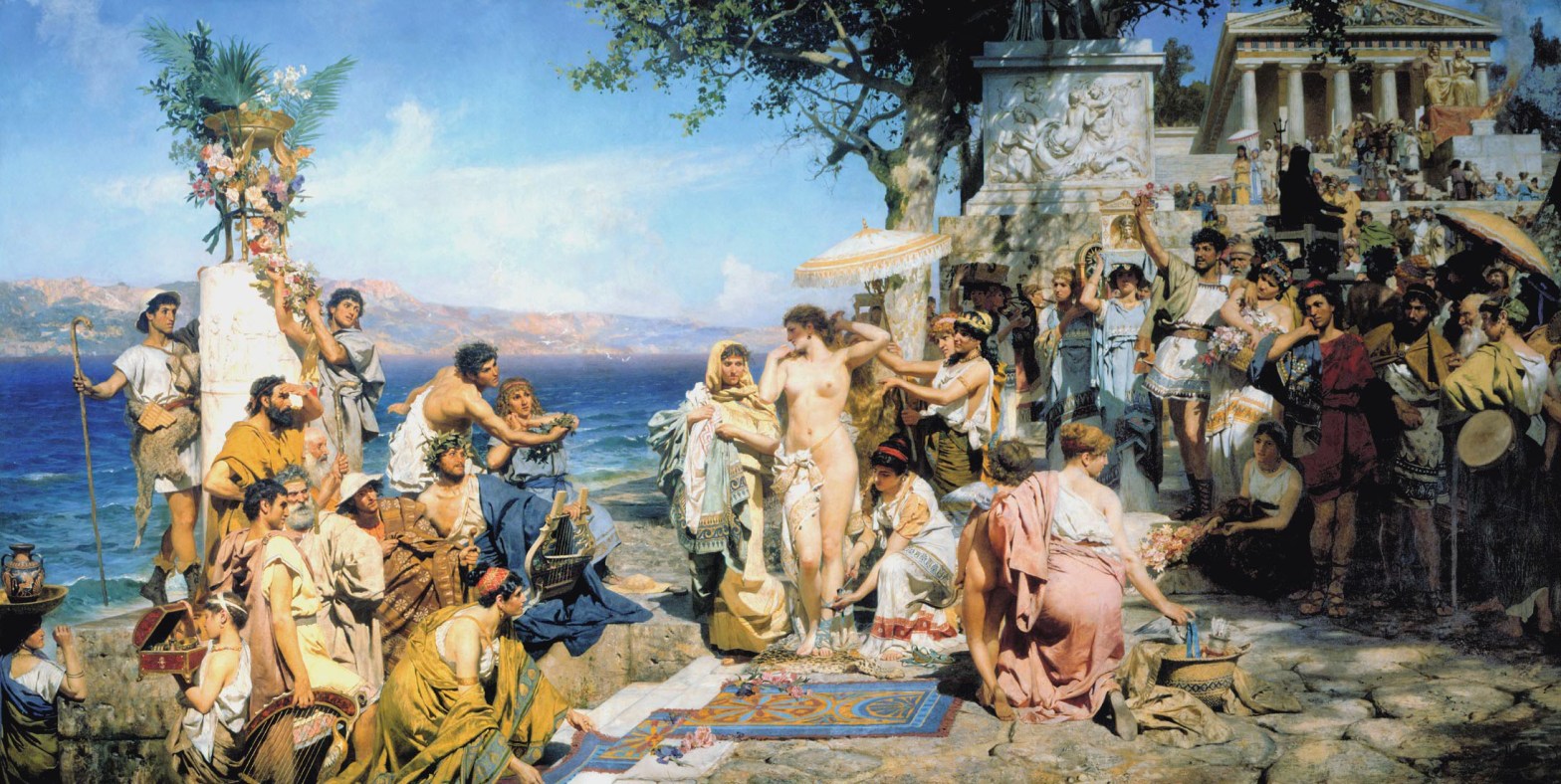
By now you probably know that 1) I was inspired to write a novel when I realized I could use my passion for history, ethnography and anthropology to get ideas and 2) the novel is a “Bronze Age Fantasy”.
What the fuck is Bronze Age Fantasy and why did I pick it? This post is my Bronze Age manifesto.
The short answer is that I am tired of European medieval fantasy. Knights, dragons, castles, elves and wizards are played out. I like it, but it is a crowded space. It’s hard to make something original out of hackneyed starting material. So I looked to break new ground. A rant on European medieval fantasy is in the works, so check back if you like brimstone.
The long answer is less acrimonious but more interesting. It covers what is the Bronze Age and what does it offer me as a storyteller?
The Bronze Age is a time period from ~3300 B.C to 1200 B.C., defined by Near-Eastern archaeologists according to technological advances in metalworking that characterized each time period. In Near Eastern historical chronology, the Bronze Age follows the Copper Age and is followed by the Iron Age. The entire, if uneven, progression of technological phases in the Near East goes something like Stone Age–> Copper Age–> Bronze Age–> Iron Age–> Classical Antiquity–> Middle Ages–> Modernity. As you can see, each of the early phases bears the name of the durable material most often used to construct tools and weapons. Once historical records begin to be kept at the beginning of Classical Antiquity, the defining characteristics of each age become less material and more abstract. For instance, the collapse of the western Roman Empire is the dividing line between Classical Antiquity and the early Medieval period. Just to give you an idea of the societies in question, a few examples of Near-Eastern Bronze Age cultures and states you may recognize include the Hittites, Babylonians, Assyrians, Sumerians, Minoans, Mycenaeans, and Phoenicians. The Bronze Age also extends to European and East Asian societies that made use of bronze. I draw fewer ideas from these cultures.
I won’t bore you any longer with archaeological minutiae. Plague and Fable (sample chapter here) takes place in a fantasy world that bears most resemblance to the late Bronze Age. I also pull inspiration from the Iron Age and Classical Antiquity. It is a fantasy novel, after all, not historical fiction (Hell, the plague portion of the book was inspired by the 2020-21 coronavirus pandemic). With that proviso, the world I am creating is largely a late Bronze Age, early Iron Age one. Selecting to build this kind of world carries with it several attractive advantages relative to creating a more typical medieval fantasy world.
1. Greater Cultural Diversity
As an anthropologist, this appeals greatly to me. While transportation and trade in the Bronze Age was sufficiently robust for scholars to call it the first wave of globalization, the diversity of culture (meaning the ideas, beliefs and practices of a group of people) in the Bronze Age was dizzying by modern standards. Much of this diversity can be related to the varied modes of subsistence that groups employed, and the irregular distribution of innovations like domesticated animals, state level governance, conscription, bronze, coinage, and writing. Hunter-gatherers, pastoralists, and small scale agricultural societies coexisted with local chiefdoms and powerful kingdoms. Patriarchies and matriarchies existed alongside divine kinships. The interrelationships of these varied groups is a gravid nexus for generating narrative tension. By the time the middle ages came around, nearly every group in forgiving climates that wasn’t at least a small state-level society had been subsumed within the expansionist aspirations of neighboring states. It is a breath of fresh air when medieval fantasy authors incorporate some non-state level societies into their narratives, like the Wildlings of GoT or the Ruh in Patrick Rothfuss’s Kingkiller Chronicles.

2. Greater Religious Diversity
Along with greater cultural diversity comes greater religious diversity. While medieval fantasy tends toward monotheism, Bronze Age fantasy would ostensibly predate monotheism. Rather, Bronze Age societies practiced multivalent sorts of polytheism and animism. And because the logic of religion imbues most aspects of a society, from its political structure, to its magic, to its economic system, to the tiny details of everyday life, choosing to write about characters from polytheistic and animistic societies will be interesting to readers who enjoy those aspects of world building. We share their humanity, but not all of their values. To me, that is a fascinating combination.
3. Greater Sexual Diversity
To put it in today’s terms (which is a bit of a fallacy), the Bronze Age world was much more non-binary than our modern one. It is important to note that sexuality was not as tightly tied to identity as it is today– it was more like a behavior or an appetite. And just as other behaviors and appetites can be varied and changeable, so too was ancient sexuality. There are examples of eunochs, sibling marriage, polyamory, what we would call bisexuality, what we would call gay or lesbian, orgies, arranged marriage, love marriage, elopements, cosmic sex, ritual sex, celibacy, and pederasty (no, I am not going to go there. Ok at least not much… ). Such diversity multiplies the opportunities for love or lust to drive storylines in novel, but in believable ways. The presence of these sexual behaviors in natural fertility societies (i.e. no reliable contraception) makes the stakes higher. While the middle ages were not nearly as stuffy as most people think, they still hold no candle to the Bronze Age in this regard.
4. Different Weapons of Choice
Swords are cool and sword fights are awesome. But what happens in a world when steel, critical for forging longswords, isn’t in the technological repertoire? In a word, interest. The spear dominated the Bronze Age (mostly, though chariots were popular among some generals), while the sword was generally used only if a spear was lost or broken. Personally, I am refreshed to think about a specially named shield and spear, rather than another longsword. The end of the tyranny of the sword also opens other opportunities for archery, spears, shields, axes and other weaponry to play important roles.
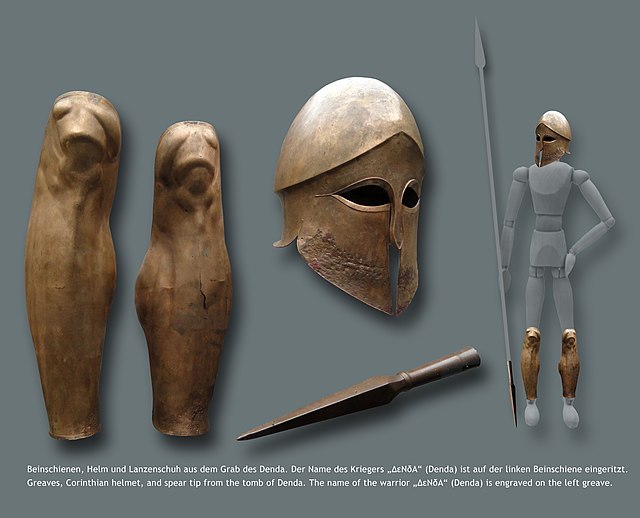
This Corinthian spearmen sported bronze greaves, a bronze helmet a bronze spear tip. 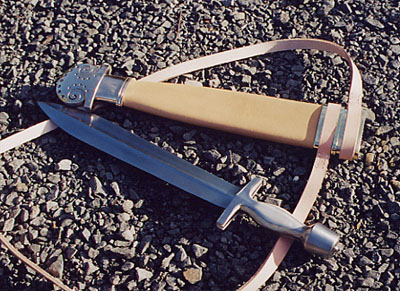
Modern Reconstruction of a Bronze Xiphos. Photo by Phokion.
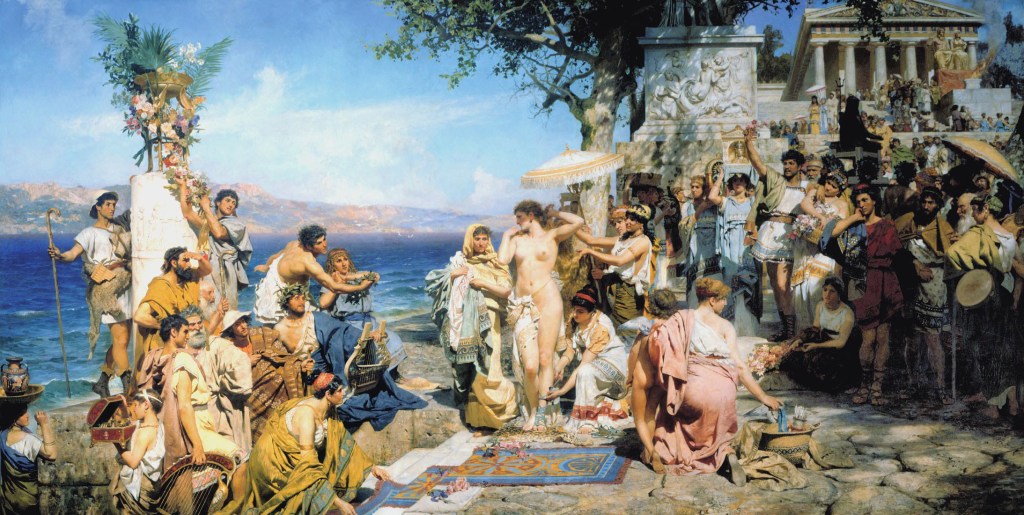
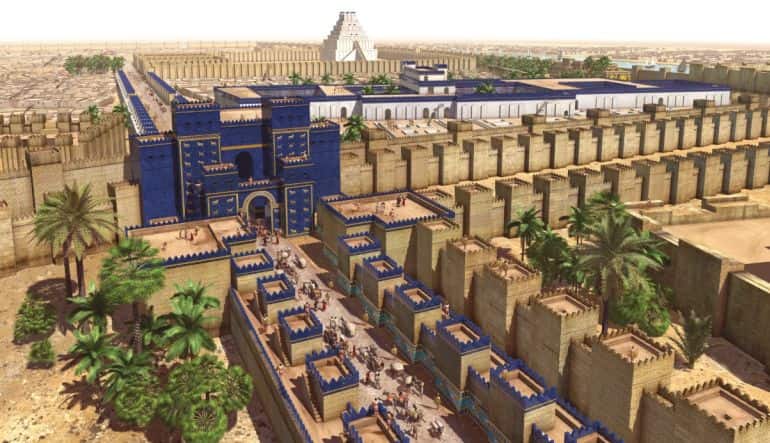
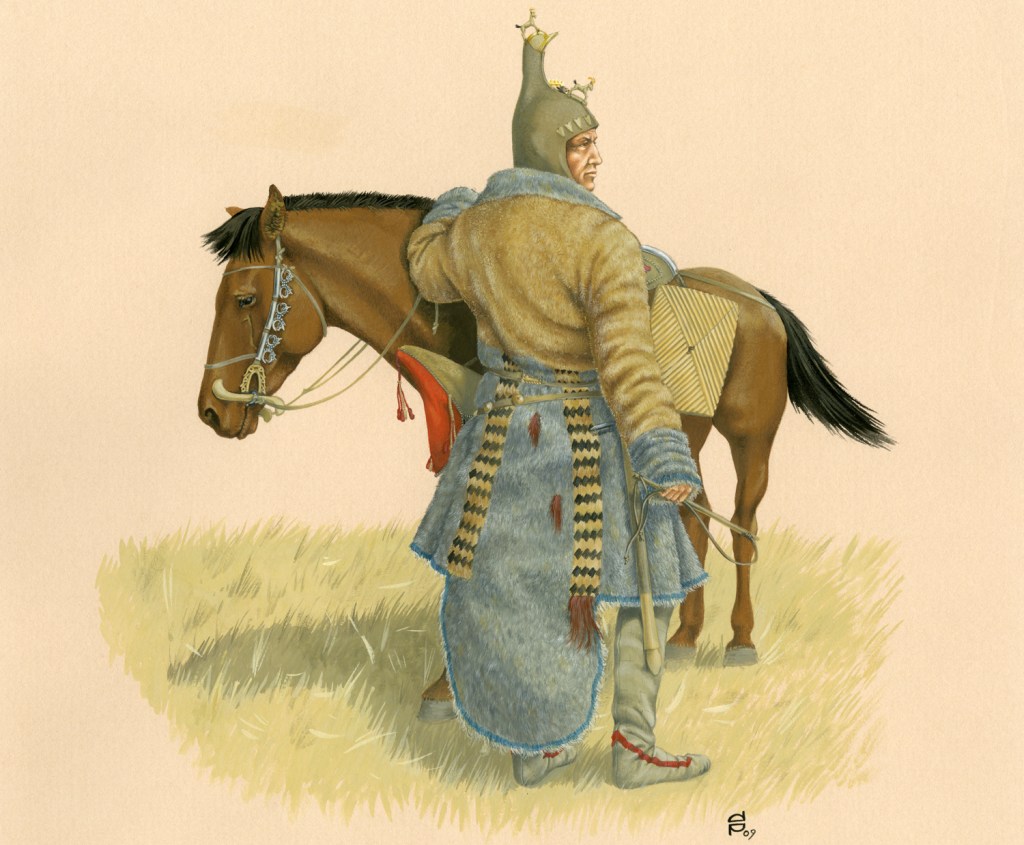
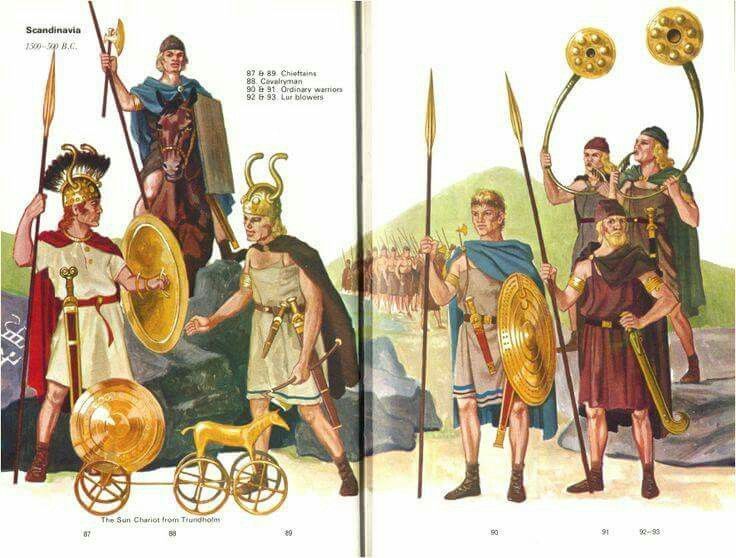
5. Beautiful, yet less familiar material culture (clothing, architecture etc.)
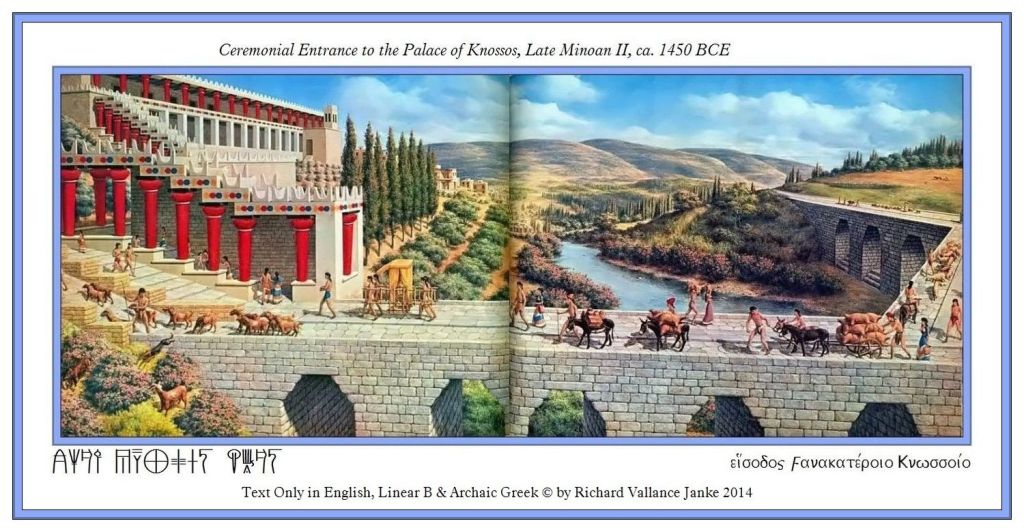
Who doesn’t love a good costume? The millions of people who attend Renaissance fairs in costume or engage in cosplay know what I am talking about. And the Bronze age is full of beautiful, unique attire. Various textiles, from cotton to linen to silk to wool, were widely in use, as were a rainbow of natural dyes and pigments. The buildings were colorful, majestic and monumental too. I’ll let the pictures speak for themselves (I am omitting photo reconstructions of the Egyptian Bronze age, as I feel most readers will already be familiar with that).

6. Different Mythological Creatures
Elves, trolls, dragons, fairies, dwarves and gnomes are the province of medieval folk tales. Yawn. The wilderness, imaginations, and even homes of Bronze Age peoples were populated by stone giants, tutelary spirits, nymphs, minotaurs, centaurs, griffins, other animal hybrids combinations and giant serpents, to name a few. These are less well-characterized and thus represent an opportunity for authorial creativity and reader discovery.
If you are intrigued by these advantages, then Plague and Fable might be a series that you would enjoy 🙂 As a creator, I also love the latitude that comes with less familiarity among potential readership. There is no playbook and few existing tropes. It is a real opportunity to write something fresh. And that excites the fuck out of me.
What would you like to see as part of a Bronze Age/Iron Age fantasy? I would love to hear about it in the comments.
-Chris
April 2021
 Christopher Golias